Habit Stacking: How to Actually Keep Your New Year’s Resolutions
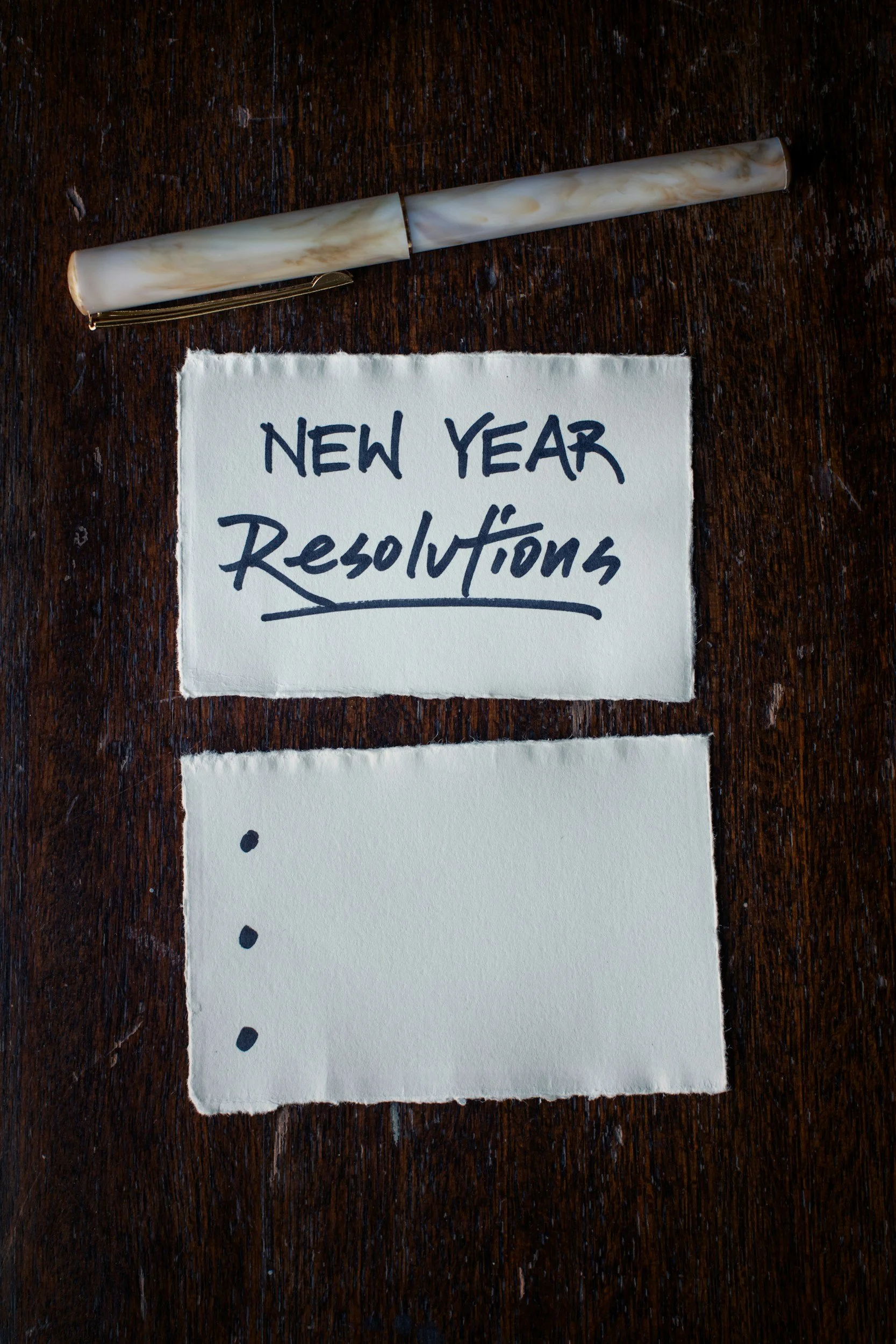
New Year’s resolutions tend to come with a lot of pressure. New year, new you. Big goals. Big announcements. Even bigger expectations. By February, many of those goals are quietly abandoned, not because we’re lazy or lack discipline, but because the way we set resolutions often asks too much, too fast, and too publicly.
If you’re tired of resolutions that feel more like a performance than a plan, habit stacking offers a quieter, more attainable alternative.

What is Habit Stacking?
Habit stacking is the practice of attaching a new habit to something you already do consistently. Instead of trying to build a brand-new routine from scratch, you use an existing habit as the anchor.
For example:
After I brush my teeth, I’ll stretch for 30 seconds
While my coffee brews, I’ll write one sentence
After I open my laptop, I’ll take three deep breaths
The key is that the “stack” relies on something already stable in your life. You’re not reinventing your day - you’re slightly rearranging it.
Why Resolutions Fail (It’s Not a Moral Issue)
A lot of New Year’s resolutions fail because they’re designed for the version of us we wish we were, not the one we actually are on a random Tuesday in January. They’re often:
Vague (“be healthier”)
Overly ambitious (“work out every day”)
Public-facing (posted, tracked, announced)
This turns self-improvement into a performance. The goal becomes looking disciplined instead of becoming consistent. When life inevitably interferes, the all-or-nothing mindset kicks in, and one missed day feels like failure.
Habit stacking sidesteps this entirely by focusing on integration instead of transformation.
Smaller Is Not Settling
One of the most uncomfortable parts of habit stacking is how unimpressive it can look. Drinking one glass of water. Reading one page. Meditating for one minute. There’s nothing glamorous about it - and that’s why it works.
Habit stacking values repetition over intensity. You’re not trying to overhaul your identity on January 1st. You’re teaching your brain that change can be safe, boring, and doable.
Small habits done consistently don’t just add up - they compound. And unlike dramatic resolutions, they don’t require motivation to survive.
Making Resolutions More Private (and More Real)
Not every goal needs to be shared. In fact, some goals are more likely to stick when they’re kept intentionally small and quiet. Habit stacking naturally supports this because the wins are internal.
You don’t need a fresh notebook, a new app, or a perfectly designed morning routine. You need one existing habit and permission to start imperfectly.
Try framing your resolution like this:
“After I already do ___, I will ___.”
That’s it. No timelines. No streaks. No punishment for missing a day.
Progress Without the Performance
Habit stacking isn’t about becoming a better version of yourself overnight. It’s about building trust with yourself slowly. It’s about showing up in ways that don’t require applause.
This New Year, you don’t need a dramatic reset. You don’t need perfection. You don’t even need to call it a resolution.
You just need one habit you already have - and one small thing you’re willing to place gently on top of it.