
Our Blog
Welcome to the Growing Roots Blog page - here we will showcase our involvement within the community, treatment and services that deserve to be highlighted and other exciting activities that we’re working on.
-
November 2025
- Nov 13, 2025 How to Support a Loved One with an Eating Disorder During Thanksgiving Nov 13, 2025
- Nov 6, 2025 Going Home for the Holidays Nov 6, 2025
-
October 2025
- Oct 15, 2025 OCD Awareness Month Oct 15, 2025
-
September 2025
- Sep 16, 2025 Preparing for S.A.D Sep 16, 2025
-
August 2025
- Aug 27, 2025 Dealing with Change Aug 27, 2025
- Aug 13, 2025 Can AI Replace Your Therapist? Aug 13, 2025
- Aug 6, 2025 Gearing Up for Another School Year Aug 6, 2025
-
July 2025
- Jul 29, 2025 What Do We Have to Offer? Jul 29, 2025
- Jul 22, 2025 Self Care? Am I Doing it Right? Jul 22, 2025
-
June 2025
- Jun 25, 2025 PTSD Awareness Month Jun 25, 2025
- Jun 18, 2025 Men's Mental Health Month Jun 18, 2025
- Jun 11, 2025 Celebrating Pride Month in Rural New Hampshire: a How-To Guide Jun 11, 2025
-
May 2025
- May 14, 2025 Maternal Mental Health May 14, 2025
- May 7, 2025 Diet Culture: Why Trendy Diets Can Be Harmful to Your Health May 7, 2025
-
April 2025
- Apr 14, 2025 Helping Someone with a Substance Use Disorder—When They Don’t Think They Have One Apr 14, 2025
- Apr 9, 2025 Stress: Its Effects on the Body and Brain Apr 9, 2025
-
March 2025
- Mar 26, 2025 How Mental Health Can Change During the Spring Mar 26, 2025
- Mar 19, 2025 Self-Harm Awareness Month: Understanding, Supporting, and Breaking the Stigma Mar 19, 2025
- Mar 12, 2025 How To Get the Best Night's Sleep Mar 12, 2025
-
February 2025
- Feb 12, 2025 Six Inexpensive Ways to Reconnect with Your Partner This Valentine’s Day Feb 12, 2025
- Feb 5, 2025 Self-Love This Valentine's Day: 5 Ways to Care for Yourself Feb 5, 2025
-
January 2025
- Jan 29, 2025 Bucket List for 2025 Jan 29, 2025
- Jan 13, 2025 New Year’s Resolutions: Is it laziness or executive functioning that keeps us from reaching our goals? Jan 13, 2025
- Jan 2, 2025 How to Pick the Right Supplements: A Simple Guide to Choosing What’s Best for You Jan 2, 2025
-
December 2024
- Dec 18, 2024 Boundary Setting: During the Holidays Dec 18, 2024
- Dec 9, 2024 Holiday Stress: How to Avoid Overspending Dec 9, 2024
- Dec 4, 2024 How Laughter Can Improve Your Physical and Mental Health Dec 4, 2024
-
November 2024
- Nov 26, 2024 Ask a Therapist: How to Survive the Holidays while in ED Recovery Nov 26, 2024
- Nov 20, 2024 Thanksgiving Survival Guide Nov 20, 2024
- Nov 18, 2024 5 Tips to Mentally Prepare for Food Holidays While in Recovery Nov 18, 2024
-
October 2024
- Oct 16, 2024 Supporting Your Child Through Bullying: A Guide for Parents Oct 16, 2024
- Oct 2, 2024 Breast Cancer Awareness: Understanding, Prevention, and Self-Examination Oct 2, 2024
-
September 2024
- Sep 25, 2024 Embracing the Dark: Understanding S.A.D and the Power of Hygge Sep 25, 2024
- Sep 18, 2024 The Science of Happiness: Impact on Mental Health and Managing Digital Habits Sep 18, 2024
- Sep 12, 2024 Suicide Prevention: Statistics, Resources, and How to Make a Difference Sep 12, 2024
- Sep 4, 2024 Understanding Burnout: Causes, Symptoms, and Strategies for Recovery Sep 4, 2024
-
August 2024
- Aug 28, 2024 Navigating Grief: How People Cope and How Loved Ones Can Offer Support Aug 28, 2024
- Aug 21, 2024 The Power of Reiki: A Journey into Japanese Healing and Energy Balance Aug 21, 2024
- Aug 14, 2024 Preparing for Back to School: Tips for Mental Health and Smooth Transitions Aug 14, 2024
-
July 2024
- Jul 31, 2024 The Effects of Loneliness on Mental and Physical Health Jul 31, 2024
-
June 2024
- Jun 26, 2024 Understanding PTSD: Unpacking the Impact and Path to Healing Jun 26, 2024
- Jun 12, 2024 Ending the Stigma: Understanding Men’s Mental Health Jun 12, 2024
-
May 2024
- May 22, 2024 The Benefits of Meditation May 22, 2024
- May 15, 2024 Empowering Women: Advocating for Your Right to Healthcare May 15, 2024
- May 8, 2024 The Effects of Diet Culture May 8, 2024
-
April 2024
- Apr 17, 2024 How Therapists Destress: Tips and Strategies for Self-Care Apr 17, 2024
- Apr 10, 2024 The Benefits of Walking Apr 10, 2024
-
March 2024
- Mar 29, 2024 Interview With a Ketamine Patient Mar 29, 2024
- Mar 22, 2024 Healthy “Mocktail” Recipes Mar 22, 2024
- Mar 15, 2024 Understanding Sleep Apnea and How to Improve Your Rest Mar 15, 2024
- Mar 1, 2024 Social Media: Understanding Its Impact on Self-Esteem Mar 1, 2024
-
February 2024
- Feb 14, 2024 Attachment Styles and Relationships Feb 14, 2024
-
January 2024
- Jan 26, 2024 The Vital Role of Sunlight Exposure in Human Health Jan 26, 2024
- Jan 18, 2024 The Importance of Delayed Caffeine Intake Jan 18, 2024
- Jan 11, 2024 The Pennebaker Protocol Jan 11, 2024
- Jan 4, 2024 The Surprising Benefits of Sodium: More Than Just Salt Jan 4, 2024
-
December 2023
- Dec 23, 2023 11 Warning Signs of an Eating Disorder Dec 23, 2023
- Dec 21, 2023 Effective Communication Techniques for Building Stronger Family Bonds Dec 21, 2023
- Dec 20, 2023 7 Reasons to Digital Detox for the Holidays Dec 20, 2023
-
November 2023
- Nov 30, 2023 The Silent Struggle: The Impact of Eating Disorders on Mental Health Nov 30, 2023
- Nov 22, 2023 8 Ways Families Can Support A Loved One With An Eating Disorder During The Holidays Nov 22, 2023
- Nov 15, 2023 Managing an Eating Disorder During Thanksgiving Nov 15, 2023
- Nov 14, 2023 A Guide to Understanding Eating Disorders Nov 14, 2023
- Nov 2, 2023 The Impact of Negative Online Content on Mental Health Nov 2, 2023
-
October 2023
- Oct 30, 2023 5 Benefits of B12 Shots Oct 30, 2023
- Oct 18, 2023 What is NAD+ and how can it benefit your overall health Oct 18, 2023
- Oct 11, 2023 9 Benefits of Seeking Help For Mental Health Oct 11, 2023
- Oct 9, 2023 Mental Illness Awareness Week Oct 9, 2023
-
September 2023
- Sep 22, 2023 What is Functional Medicine? Sep 22, 2023
- Sep 20, 2023 5 Action Steps for Helping Someone in Emotional Pain Sep 20, 2023
-
August 2023
- Aug 31, 2023 7 helpful tips to address back-to-school anxiety Aug 31, 2023
- Aug 22, 2023 Recognizing the Signs: When to Seek Help for Your Mental Health Aug 22, 2023
- Aug 9, 2023 7 Reasons why couples counseling could be right for you Aug 9, 2023
- Aug 4, 2023 The Important Role Grief Plays In Our Lives Aug 4, 2023
-
July 2023
- Jul 27, 2023 Top 3 Ways To Stay Hydrated Jul 27, 2023
- Jul 24, 2023 45 Self-Care Ideas Jul 24, 2023
- Jul 20, 2023 What is Ketamine Assisted Psychotherapy? Jul 20, 2023
- Jul 13, 2023 What is a Stellate Ganglion Block Jul 13, 2023
- Jul 5, 2023 5 Reasons Why Summer Is the Best Time For Adolescents and Teens To Seek Help Jul 5, 2023
-
June 2023
- Jun 28, 2023 First Responders and PTSD Jun 28, 2023
- Jun 19, 2023 Misconceptions about PTSD Jun 19, 2023
- Jun 14, 2023 Men's Mental Health Statistics Jun 14, 2023
- Jun 5, 2023 Men's Health Month: Therapy for Men Jun 5, 2023
-
May 2023
- May 30, 2023 Mental Health Statistics May 30, 2023
- May 25, 2023 5 Ways To Improve Your Mental Health May 25, 2023
- May 22, 2023 The Stigma of Mental Health May 22, 2023
- May 10, 2023 Parenting & Mental Health May 10, 2023
-
April 2023
- Apr 27, 2023 The Impact of Stress Apr 27, 2023
- Apr 20, 2023 How to help an alcoholic Apr 20, 2023
- Apr 13, 2023 Understanding Sexual Assault Apr 13, 2023
- Apr 6, 2023 Signs & Symptoms of Alcoholism Apr 6, 2023
-
March 2023
- Mar 28, 2023 Symptoms of self-harm Mar 28, 2023
- Mar 22, 2023 Supporting Someone With Mental Health Illness Mar 22, 2023
- Mar 17, 2023 Good Sleep Starts The Moment You Wake Up Mar 17, 2023
- Mar 16, 2023 Cutting-Edge Treatment for PTSD, Depression, Anxiety, and Trauma Mar 16, 2023
- Mar 14, 2023 Social Media & Your Sleep Health Mar 14, 2023
-
February 2023
- Feb 21, 2023 The Power of Affirmations Feb 21, 2023
- Feb 13, 2023 Our New Location Feb 13, 2023
- Feb 8, 2023 5 Steps To Build Confidence & Self Worth Feb 8, 2023
- Feb 2, 2023 February is International Boost Self-Esteem Month Feb 2, 2023
-
January 2023
- Jan 17, 2023 A New Growing Roots... Jan 17, 2023
- Jan 9, 2023 Creating a habit Jan 9, 2023
- Jan 4, 2023 New Location Progress Jan 4, 2023
-
December 2022
- Dec 30, 2022 New Satellite Location Dec 30, 2022
- Dec 29, 2022 Pre-New Year cleansing tips Dec 29, 2022
- Dec 16, 2022 Stress Management at Woodstock PD Dec 16, 2022
- Dec 9, 2022 Are you constantly getting sick? Dec 9, 2022
- Dec 7, 2022 Disordered eating Q&A from New Hampton School students Dec 7, 2022
- Dec 2, 2022 We're moving! Dec 2, 2022
-
November 2022
- Nov 21, 2022 Integrative Medicine | Your First Appointment Nov 21, 2022
-
October 2022
- Oct 25, 2022 Ketamine Assisted Psychotherapy Client Testimonial Oct 25, 2022
- Oct 19, 2022 Holderness Central School Presentation Oct 19, 2022
What is Functional Medicine?
Functional Medicine: A Holistic Approach to Health and Wellbeing
Introduction
In an era where healthcare often feels like a one-size-fits-all solution, many people are turning to functional medicine as a more personalized and holistic approach to improving their health and wellbeing. Functional medicine aims to uncover the root causes of health issues rather than simply treating symptoms. In this blog post, we'll explore what functional medicine is and how it can help individuals regain control of their health and lead more fulfilling lives.
What Is Functional Medicine?
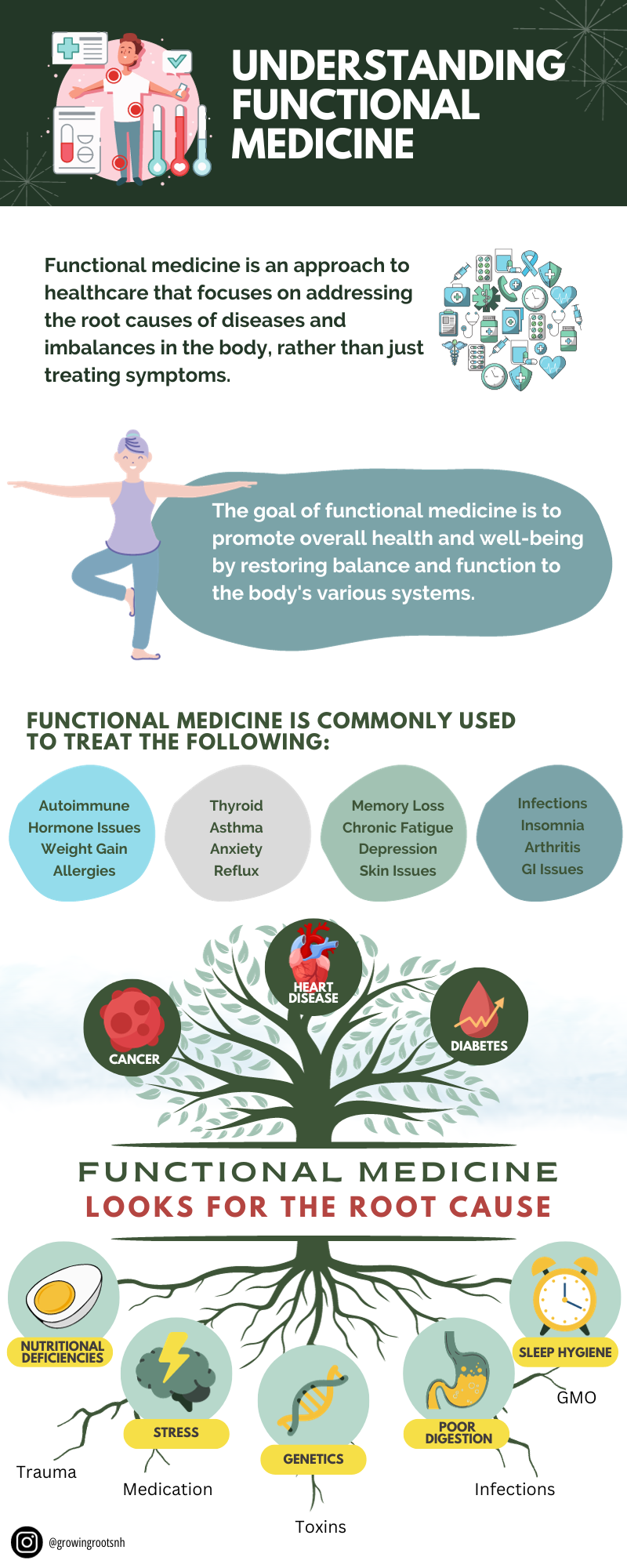
Functional medicine is a patient-centered, science-based approach to healthcare that views the body as an interconnected system. Rather than focusing solely on treating isolated symptoms, functional medicine practitioners seek to understand the underlying factors that contribute to a person's health problems. This approach allows for a more comprehensive and personalized treatment plan tailored to each individual's unique needs.
Click to view larger
“Functional medicine is a patient-centered, science-based approach to healthcare that views the body as an interconnected system.”
Key Principles of Functional Medicine
Holistic Approach: Functional medicine recognizes that the body is a complex web of interconnected systems, including physical, mental, emotional, and environmental factors. It considers the whole person rather than just their symptoms.
Personalized Care: Functional medicine practitioners take the time to understand each patient's genetic, environmental, and lifestyle factors to develop a customized treatment plan. This individualized approach often yields more effective and sustainable results.
Root Cause Analysis: Instead of merely addressing symptoms, functional medicine digs deeper to identify the root causes of health issues, which can include nutritional imbalances, inflammation, hormonal disruptions, or lifestyle factors like stress.
Integrative Therapies: Functional medicine combines traditional and alternative therapies to address a patient's unique needs. This might include nutrition, dietary changes, supplements, physical activity, stress management, and more.
How Functional Medicine Can Help
Chronic Disease Management: Functional medicine can be particularly effective in managing chronic diseases like diabetes, autoimmune disorders, and cardiovascular conditions. By addressing the underlying causes, patients can experience improved symptom relief and long-term health outcomes.
Weight Management: Functional medicine takes a comprehensive approach to weight management, considering factors such as metabolism, hormonal balance, dietary habits, and emotional well-being. This approach often results in sustainable weight loss and improved overall health.
Mental Health Support: Functional medicine recognizes the strong connection between physical and mental health. It can help individuals struggling with conditions like depression, anxiety, and mood disorders by addressing nutritional deficiencies, hormone imbalances, and lifestyle factors.
Optimal Aging: Functional medicine isn't just about treating illness; it's also about optimizing health and longevity. By addressing factors like inflammation and oxidative stress, functional medicine can help individuals age gracefully and maintain their vitality.
Prevention: Functional medicine places a strong emphasis on preventive care. By identifying and addressing risk factors before they manifest as disease, individuals can proactively safeguard their health and reduce the need for future medical interventions.

Conclusion
Functional medicine offers a refreshing alternative to the conventional healthcare model by prioritizing personalized, holistic care that seeks to uncover and address the root causes of health issues. By considering the interconnected nature of the body and the individuality of each patient, functional medicine empowers individuals to take control of their health and wellbeing. Whether you're struggling with a chronic condition, seeking to optimize your health, or looking to prevent future health issues, functional medicine may hold the key to a healthier and more fulfilling life.
Visit our Health and Wellness services page to learn more about our Functional Medicine services and much more!
5 Action Steps for Helping Someone in Emotional Pain
HOW TO help someone struggling with emotional pain
Suicide is a critical public health issue, and it's crucial to know how to support someone who may be experiencing emotional pain and contemplating self-harm. Taking action can save lives. In this blog post, we'll discuss five essential steps you can take to help someone in emotional distress.
ASK: "Are you thinking about killing yourself?" Starting the conversation about suicide can be challenging, but studies have shown that asking a person at risk if they are having suicidal thoughts does not increase the likelihood of suicide. In fact, it can be the first step towards getting them the help they need. Be direct and empathetic when asking this question.
KEEP THEM SAFE: Reducing access to highly lethal items or places is a critical aspect of suicide prevention. If the person at risk has a specific plan, inquire about it, and take steps to remove or disable the means to carry out that plan. While this may not always be easy, it can make a significant difference in their safety.
BE THERE: One of the most powerful ways to help someone in emotional pain is to be there for them. Listen carefully to what they are thinking and feeling. Research suggests that acknowledging and discussing suicide can actually reduce suicidal thoughts. Create a safe and non-judgmental space for them to open up about their struggles.
HELP THEM CONNECT: Ensure you have the 988 Suicide & Crisis Lifeline number (call or text 988) and the Crisis Text Line number (741741) saved in your phone. These resources are available 24/7 and can be a lifeline for someone in crisis. Additionally, help the person connect with a trusted individual, such as a family member, friend, spiritual advisor, or mental health professional. Encourage them to seek support from people who care about their well-being.
STAY CONNECTED: Your support doesn't end after the crisis has passed or when they've received professional care. Staying connected and following up with the at-risk individual can make a significant difference. Studies have shown that the number of suicide deaths decreases when someone continues to check in and offer support.

Helping someone in emotional pain requires empathy, understanding, and a willingness to take action. By following these five crucial steps – asking, keeping them safe, being there, helping them connect, and staying connected – you can play a vital role in suicide prevention. Remember that reaching out to professionals and crisis hotlines can also be a crucial part of the support network. Together, we can make a difference and save lives.
If you would like to request a non-urgent appointment with our office, please email us so we can schedule an appointment with one of your expertly trained staff.
7 helpful tips to address back-to-school anxiety
How to manage back-to-school anxiety
As students, families, teachers, and parents prepare for going back to school, there are often a lot of emotions. Some students are excited, some are nervous, some are angry, and others unsure or experience a combination of many feelings. The one certainty is that people are talking and having feelings about going back to school. And heading back to school means a change in routines. There is no one right way to prepare or respond, however, here are some suggestions to consider:
Tip One - Routines
Before school starts, help kids establish healthy routines including bedtime, getting up in the morning, screen time, and regular meals.
Tip Two - Listen
Listen to your children and validate their thoughts and feelings; just saying ‘don’t worry’ may cause more anxiety and possibly prevent kids from expressing themselves.
Tip Three - Self-check
Check in with your stress levels – remember that everything doesn’t need to be “perfect” for the first day.


Tip Four - Fun transition
Blend back to school with fun activities so transition is less sudden. For example, plan a trip to the lake, go hiking, a shopping or movie outing, camping, or whatever your child enjoys.
Tip Five - Be attentive
Ask questions and listen to what your child is saying about his or her experiences the first few weeks of school. Don’t try to “fix” everything, rather listen and figure out a plan together (if needed).
Tip Six - Be prepared
Prepare for what you can – anxiety thrives in uncertainty – so do a test run for school, go to open houses or school community events offered before the beginning of school and in the first few weeks of the start of school.
Tip Seven - Communicate with the school
Talk to school counselors to provide updates since the previous school year regarding any social, family, emotional or behavioral issues that may have arisen.
Bonus!
If you child continues to struggle with being back in the school routine you may want to consider professional help. Having a professional to lend their expertise and guidance on navigating these changes can help both the child and parents. If you would like to request an appointment with one of our expert staff, please contact us.
